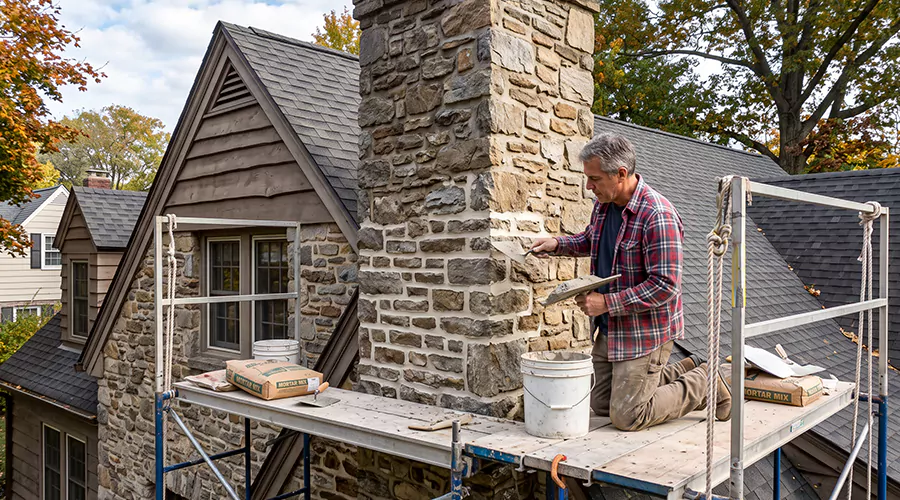
What Is Chimney Tuckpointing?
Tuckpointing replaces crumbling mortar and improves both strength and appearance. It works best when bricks are still sound and damage is limited to the joints.




Based on 500+ Reviews

Proudly American
Owned & Operated

Chimney tuckpointing is a masonry repair process used to restore damaged or deteriorating mortar joints between chimney bricks. Over time, mortar can crack, crumble, or wear away because of moisture, weather exposure, temperature changes, and aging.
When mortar joints become damaged, water can enter the chimney structure and weaken the surrounding bricks. Tuckpointing helps restore the strength of the masonry, improve water resistance, and extend the life of the chimney.
Although the terms tuckpointing and repointing are sometimes used interchangeably, tuckpointing is a specific technique that focuses on repairing mortar joints while also improving the appearance of the masonry.
Mortar joints play an important role in keeping chimney bricks stable and protecting the structure from moisture.
Damaged mortar can lead to:
Tuckpointing restores damaged joints and helps prevent water from entering the chimney. A chimney with deteriorating mortar may continue to weaken if repairs are delayed.
Several factors can cause chimney mortar joints to fail over time.
Common causes include:
Because chimneys are exposed to outdoor conditions year-round, mortar often deteriorates faster than other masonry areas.
Tuckpointing and repointing are closely related masonry repair techniques, but they are not exactly the same.
| Feature | Tuckpointing | Repointing |
|---|---|---|
| Main purpose | Repair mortar joints and improve appearance | Replace damaged mortar joints |
| Removes old mortar | Yes | Yes |
| Adds new mortar | Yes | Yes |
| Uses contrasting mortar line | Often | Usually no |
| Focus | Repair and appearance | Structural restoration |
In chimney repair, both methods restore damaged mortar joints. The best option depends on the condition of the chimney and the homeowner's goals.
Homeowners should look for signs that mortar joints are deteriorating.
Common warning signs include:
If mortar is damaged, water can enter through the openings and cause additional chimney problems.
Chimney tuckpointing involves several steps to restore damaged mortar joints.
The first step is evaluating the condition of the chimney.
The inspection checks:
This determines whether tuckpointing is enough or if additional repairs are needed.
The damaged mortar must be removed before new material is applied.
This process involves:
Removing deteriorated mortar helps create a stronger bond with the new material.
New mortar is carefully placed into the repaired joints.
The mortar should be compatible with:
Using the wrong mortar type can create additional stress and future cracking.
After applying new mortar, the joints are finished to create a smooth appearance.
Proper finishing helps:
After tuckpointing, the repaired areas are checked for:
Additional repairs may be recommended if other chimney problems are found.
Tuckpointing is usually needed when mortar joints show signs of deterioration but the bricks themselves are still in good condition.
It may be recommended for:
However, tuckpointing may not be enough when:
Tuckpointing can help stop leaks caused by damaged mortar joints.
However, it will not fix leaks caused by other problems such as:
A complete chimney inspection may be needed to determine the actual source of water entry.
The lifespan of tuckpointing depends on:
A properly completed tuckpointing repair can last many years when the chimney is maintained properly.
The cost of chimney tuckpointing depends on:
Typical cost factors include:
| Factor | Effect on Cost |
|---|---|
| Small repair area | Lower cost |
| Large chimney surface | Higher cost |
| Difficult roof access | Increased labor |
| Extensive mortar damage | More materials and time |
Repairing mortar damage early is usually less expensive than rebuilding damaged chimney sections.
Small masonry repairs may appear simple, but chimney tuckpointing requires proper techniques and materials.
DIY challenges include:
Professional repair may be recommended when:
Preventive maintenance can help reduce the need for tuckpointing.
Helpful steps include:
Keeping moisture away from the masonry system helps protect mortar joints.
Chimney tuckpointing is a masonry repair method used to restore damaged mortar joints between chimney bricks. It helps improve the strength, appearance, and moisture resistance of the chimney structure.
Cracked or deteriorating mortar can allow water to enter the chimney and cause larger problems, including loose bricks and structural damage. Tuckpointing repairs damaged joints by removing old mortar and applying new material.
Regular chimney inspections and timely masonry repairs help protect the chimney and prevent more expensive repairs in the future.
Chimney tuckpointing is a masonry repair process that replaces damaged mortar joints between chimney bricks.
They are similar, but tuckpointing often focuses on both mortar repair and improving the appearance of masonry joints.
Signs include cracked mortar, missing joints, crumbling areas, loose bricks, and water leaks.
It can stop leaks caused by damaged mortar joints, but other chimney problems may require separate repairs.
The lifespan depends on materials, workmanship, weather exposure, and chimney maintenance.
Yes. Damaged mortar can allow water to enter and cause additional chimney deterioration.
Tuckpointing replaces crumbling mortar and improves both strength and appearance. It works best when bricks are still sound and damage is limited to the joints.
